
Re-examining our emotional connection to unchosen gifts — and how it shapes social identity, self-perception, and the future of personalized human–AI interaction through Kansei engineering.
You also can read the article on Medium!
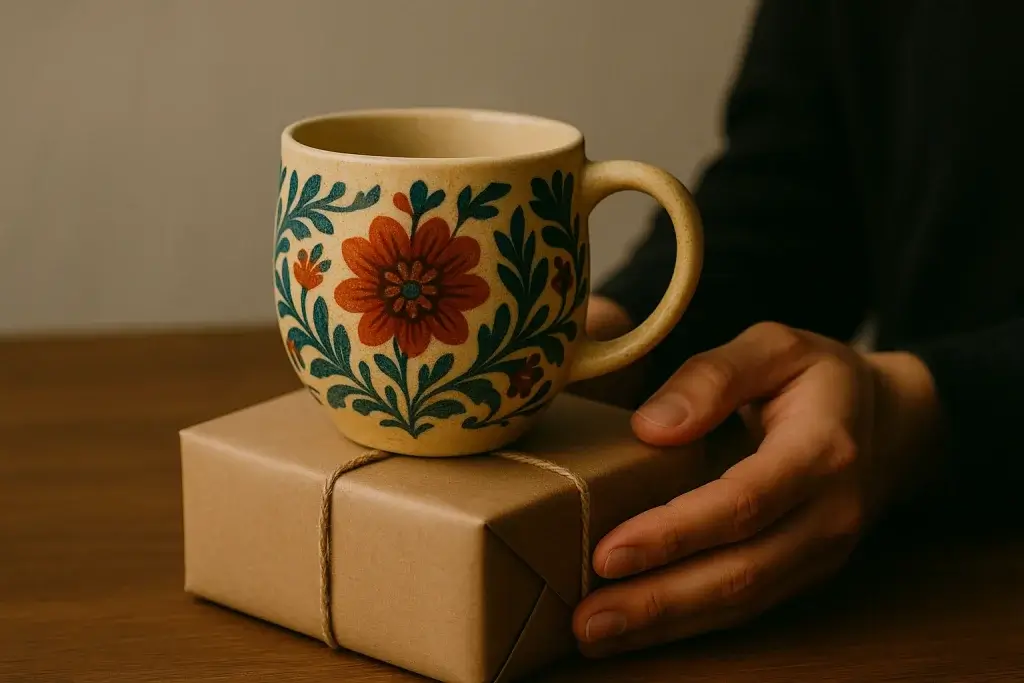
I would have never chosen that mug.
Its pale color, its awkward round shape—none of it matched my taste. The design felt off. The handle too thick. If I had seen it in a store, I would have walked right by.
But my friend picked it for me.
She handed it over with a soft smile and said, “I thought of you.” And now, strangely, I drink from it every morning.
When Someone Sees You, Differently
There’s something quietly disarming about receiving a gift you didn’t choose.
You weren’t in control. You didn’t filter the options. You didn’t compare colors or read reviews.
But someone else did. Someone walked through a shop or scrolled through a page and thought, this feels like you. And suddenly, that thing lives in your home. Becomes part of your day. Maybe even becomes beloved.
Why is that?
Objects That Reflect Us
We often assume that we know our own taste best. That the things we choose say the most about who we are.
But sometimes, the things others choose for us tell a different, clearer story—or at least a more surprising one. They reflect not just our preferences, but how we are perceived. A gifted object is not just a thing. It’s a mirror. A glimpse into someone else’s experience of us.
When a friend chooses a mug or a scarf or a book and hands it to us with the unspoken message this is you, we suddenly find ourselves seeing a version of ourselves we didn’t realize was visible.
That object becomes a kind of monument—a physical token of someone else’s understanding of us.
The Gift as a Mirror — and Sometimes, a Stranger
But not all reflections are familiar.
Sometimes, what we see in the gift is not something we identify with.
The object doesn’t feel like “us.” It might feel off. Even strange. And that, too, is revealing.
Occasionally, we realize the gift is shaped by a version of ourselves we’ve pretended to be—out of social anxiety, politeness, or a quiet desire to be accepted.
And yet, if someone close to us sees us that way—if they’ve captured that version and believed in it enough to make it real in the form of a gift—it can feel like a strange badge of honor. An unexpected validation. A moment of emotional resonance.
“I thought you’d like this.”
Translation: I believe this is who you are.
And if we like what we see, it feels like being awarded a medal.
When that happens, something opens. A bridge forms between the person we are, the person we wish to be, and the person others already see. And we begin a quiet dialogue with the object—and with ourselves.
Objects as Emotional Artifacts
Sociologist Charles Cooley described the “looking-glass self”—the idea that we construct our identity by seeing our reflection in the eyes of others. A gifted object becomes that mirror. A friend holds it up. We look. Sometimes we smile. Sometimes we flinch. But we look.
This idea is echoed in design psychology. Donald Norman, in Emotional Design, argues that we connect with objects not because of their function, but because of the stories and feelings they carry. We keep an old sweater not for its style, but for the person who gave it to us. A chipped cup, not for its beauty, but because it once made someone we love think of us.
Kansei and the Design of Emotion
In Japanese design philosophy, there’s a practice called Kansei engineering—a method of turning human feelings into product features. It’s about resonance, not logic. Emotional connection, not utility.
Kansei invites us to design not just for needs, but for the felt experience of a person. It asks:
What would it mean to give someone not just a product—but a mirror of who they are?
This principle leads to a powerful design question:
Can we use this knowledge to create machines—or interfaces or systems—that gift us reflections of ourselves?
When the Giver is Not Human
As AI systems become more advanced, they’re increasingly able to observe us. To track our habits. Learn our preferences. Predict our needs.
But what if they could do something deeper?
What if machines could learn to offer us not just what we want—but what resonates with who we are?
Not just personalization, but emotional reflection.
Could an AI recommend a playlist, a design, or a product that feels like a friend seeing through our masks? Could it reflect back a piece of us we didn’t know we’d revealed?
This isn’t about manipulation or marketing. It’s about the possibility of machines that don’t just serve us, but recognize us. Machines that could participate in the subtle dance of identity, just as humans do when they offer each other gifts.
Design as Storytelling—and Preservation
And here, the conversation deepens.
I begin to wonder—if a product can carry this kind of emotional power, could that be a path toward longer-lasting, more meaningful design?
Could this be a way to create products that stay—not just because of durability, but because of emotional longevity? Products that last as long as their materials do, simply because we can’t bear to part with them?
This is not a new idea. Our ancestors knew this. They lived with objects they cherished—not for their brand, but for their stories. Their tools and cups and clothes were full of memory and spirit.
Today, in a time when products are designed to disappear, when our memories vanish into cloud folders and screenshots, I long for something different.
I want to design objects that people hold onto. That breathe. That mean something.
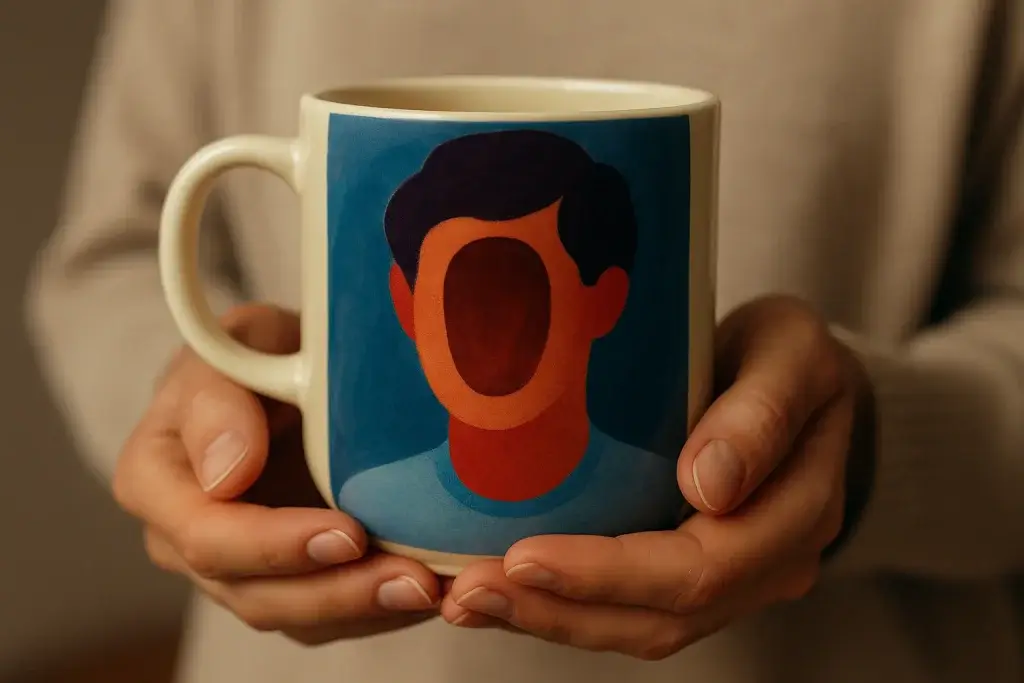
A Mug, a Mirror, a Philosophy
I still drink from that mug.
It’s not the prettiest thing I own. But it carries a feeling. It reminds me of a moment when someone saw something in me, something I didn’t choose—but maybe needed to see.
That experience taught me to notice the emotional residue left behind by objects. It taught me to listen to what they reflect. And now I ask:
Can we design products and systems that carry that same reflective power?
Can we build technology that holds space for human identity, complexity, and surprise?
If so, maybe we can offer the world not just more things—but more mirrors.
Not just functionality, but meaning.
Not just presence—but presence that sees us back.
So I leave you with this:
If you ever saw something on a shelf—simple, strange, beautiful—and it reminded you of me…
What would it be?
And what would that object say about the me that lives in your eyes?
Do not hesitate to reach out for sharing thought and ideas!
Leave a Reply